
Induction soldering generates heat directly within the material
In induction soldering, heat is not supplied from outside but is generated directly within the conductive material. This process is based on a rapidly changing electromagnetic field, which induces so-called eddy currents in the workpiece.
This physical mechanism results in targeted heating precisely at the solder joint. This offers clear advantages in selective soldering:
- locally confined heat input
- no unnecessary heating of adjacent components
- a contactless process with no mechanical stress
- highly suitable for sensitive components
These characteristics make induction soldering particularly efficient and reliable.
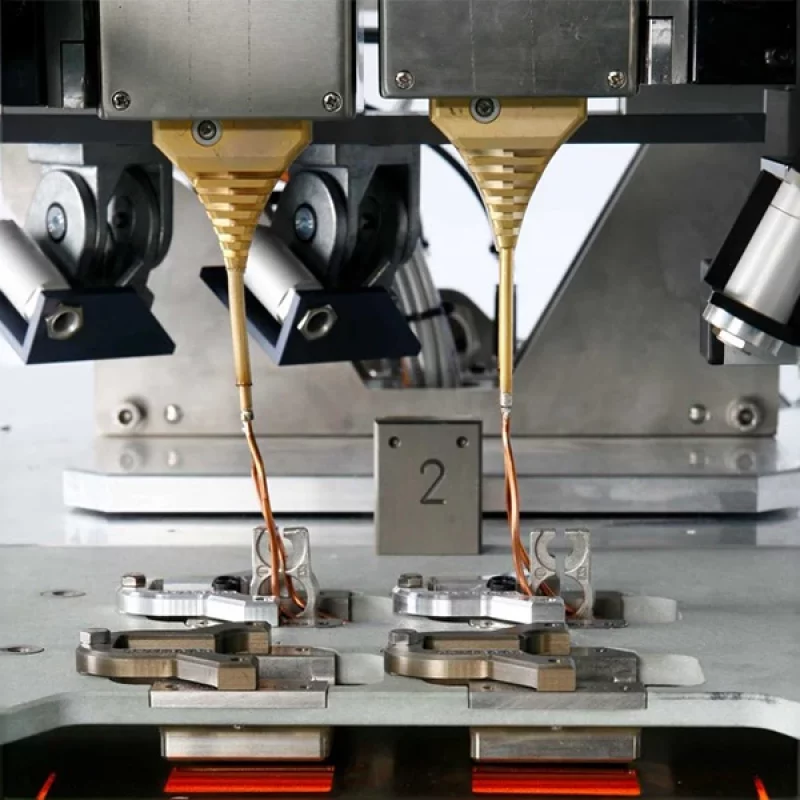
Induction soldering in selective soldering ensures stable processes
A key advantage of induction soldering in selective soldering lies in the precise control of heat input. This allows processes to be set with great precision and reproduced consistently.
In day-to-day operations, this means:
- uniform heating of the solder joint
- stable process conditions over many cycles
- reduced thermal stress on sensitive components
This stability is a crucial factor, particularly in series production.
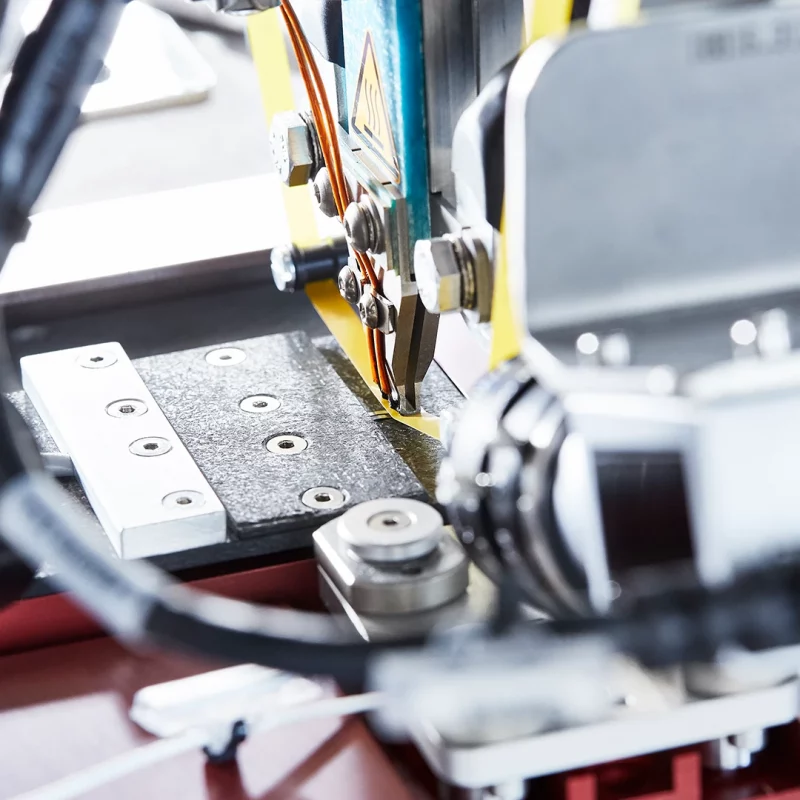
Induction soldering and wire feed must be precisely synchronised
To ensure a consistently high standard of soldering quality, it is not only the generation of heat that is crucial, but also the precise feeding of the solder. The wire feed must be precisely synchronised with the induction process to ensure a defined amount of solder and clean solder joints.
Key requirements are:
- precise positioning of the wire
- controlled feeding of the solder
- synchronisation of wire movement and heat input
It is only through this interplay that a stable and reproducible soldering process is achieved.
SWF wire feed ensures maximum process reliability during induction soldering
When used in conjunction with the SWF (Sensitive Wire Feeder), induction soldering becomes a highly precise and controlled process. EUTECT utilises a patented wire feed system which is the only one of its kind in the world to feature both force and position control.
Thanks to its integrated sensors, the system detects:
- deflected wire
- faulty wire feed
- minor process deviations
In addition, the SWF enables:
- reproducible and controlled wire movement
- kink-free feeding, even with thin wires
- optimal coordination with induction, laser and piston soldering
The result is a significant improvement in process reliability throughout the entire soldering process.
Find out more about our automated laser soldering process here
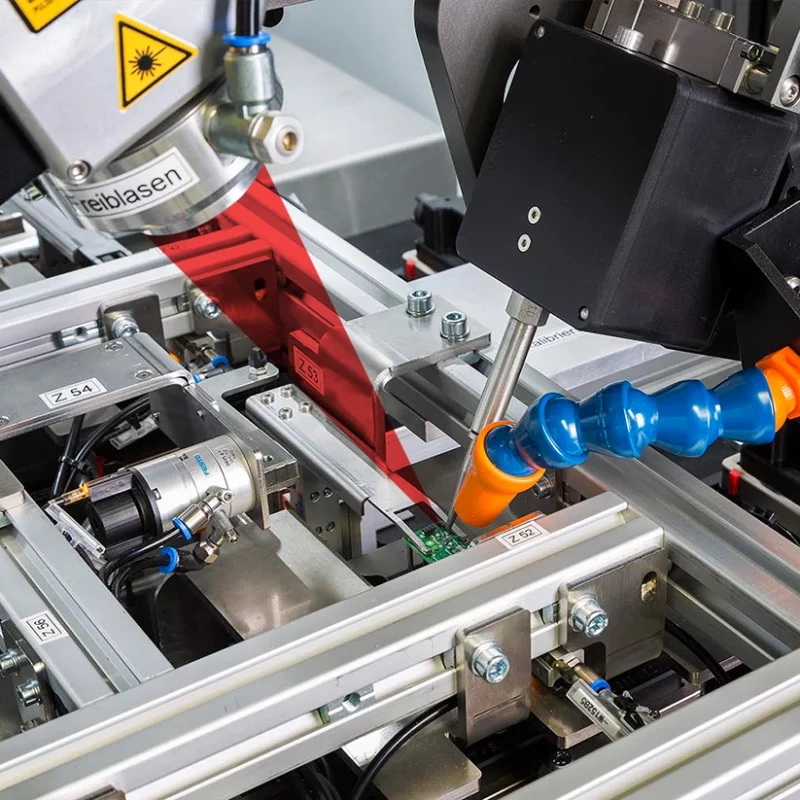
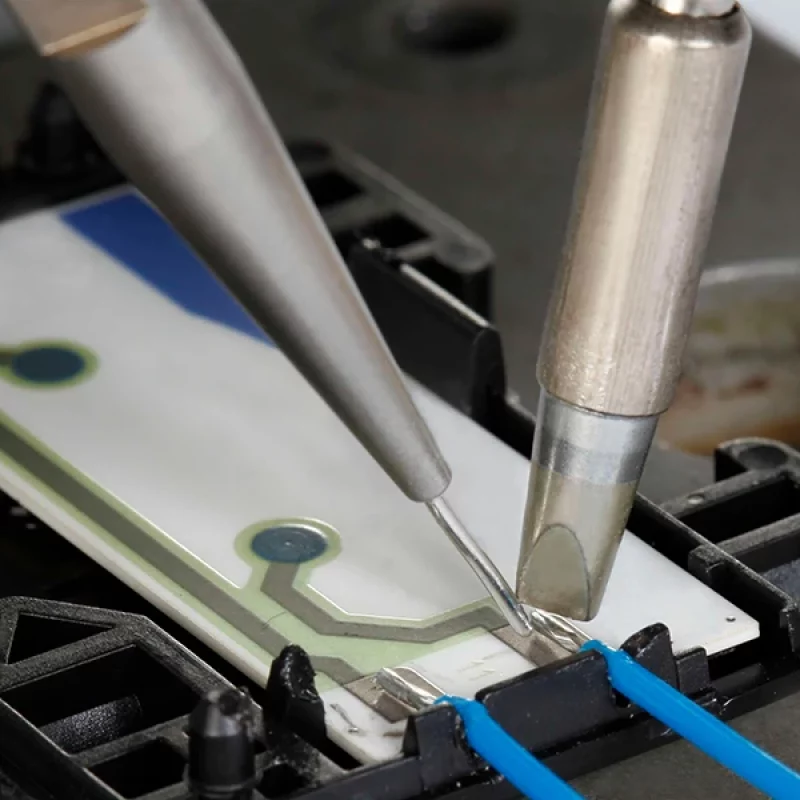
Find out more here about our precision piston soldering process
Induction soldering with SWF enables reproducible production processes
The combination of induction soldering and SWF wire feeding ensures consistent results over many cycles. Thanks to the electromechanical sensors and precise control, process deviations are detected at an early stage and compensated for.
This leads to:
- high repeatability
- stable series production processes
- consistent solder joint quality
This reproducibility is crucial, particularly in demanding applications.
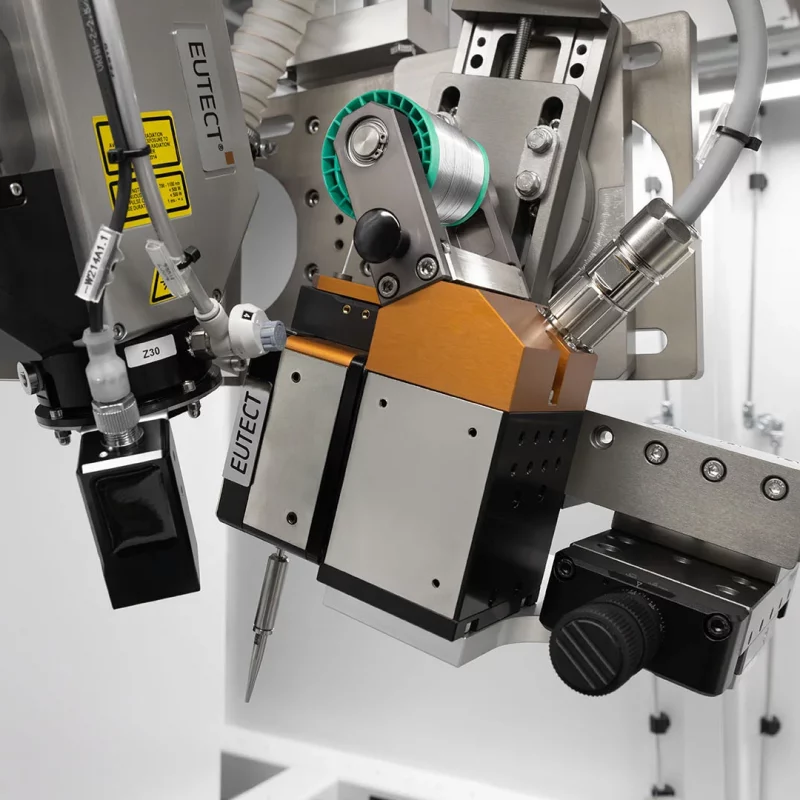
Induction soldering and SWF as an efficient solution for selective soldering
Induction soldering enables precise, contactless heat input directly into the material. When combined with a controlled wire feed system such as the SWF, this results in a stable, efficient and reproducible soldering process.
EUTECT utilises this combination to ensure a high level of process reliability and consistent soldering quality, even in demanding applications.