Piston soldering

Precise piston soldering
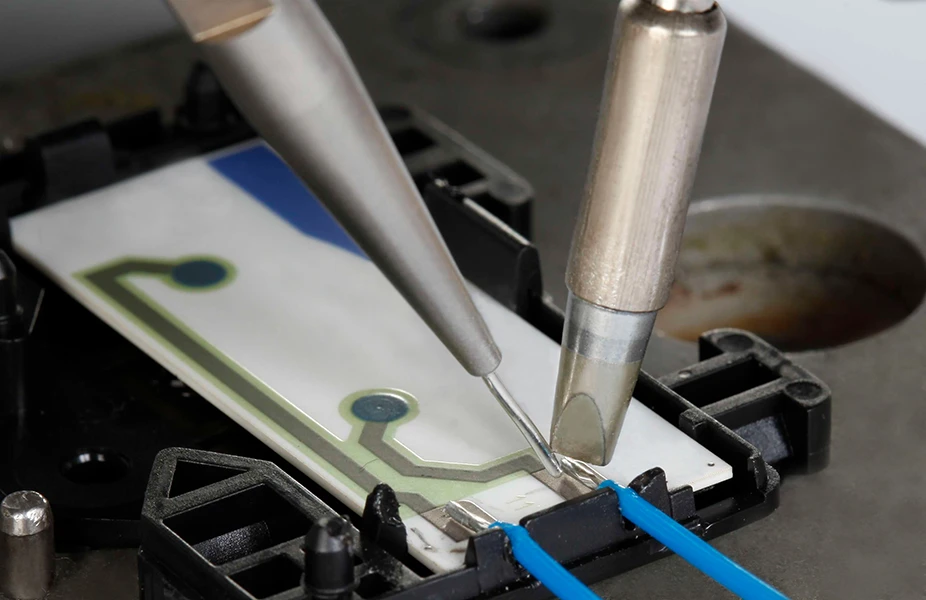
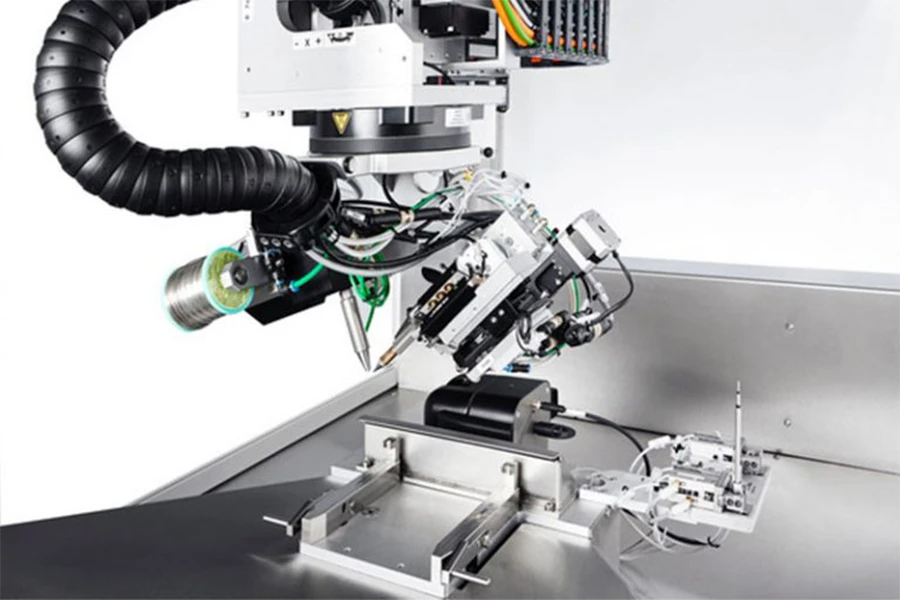
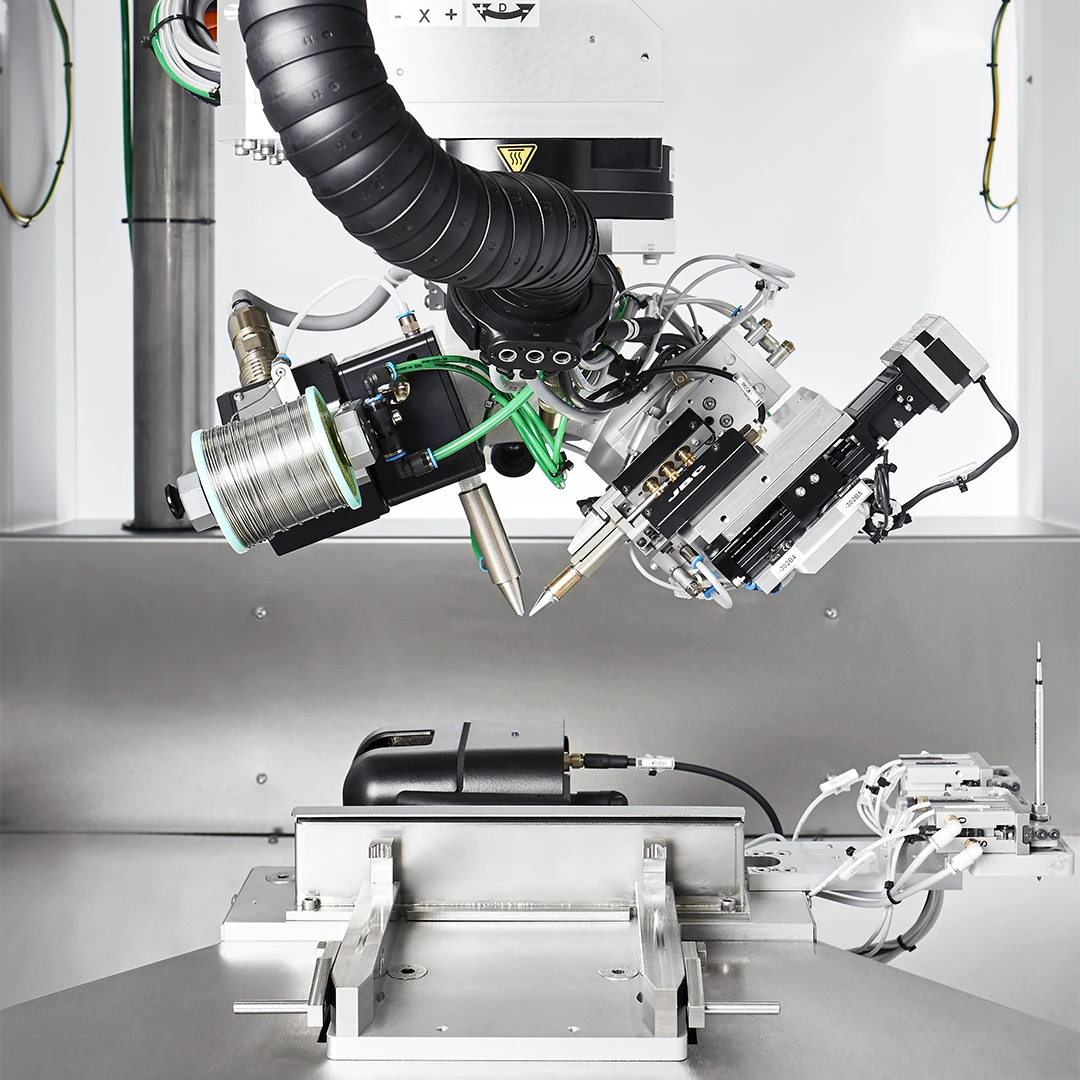
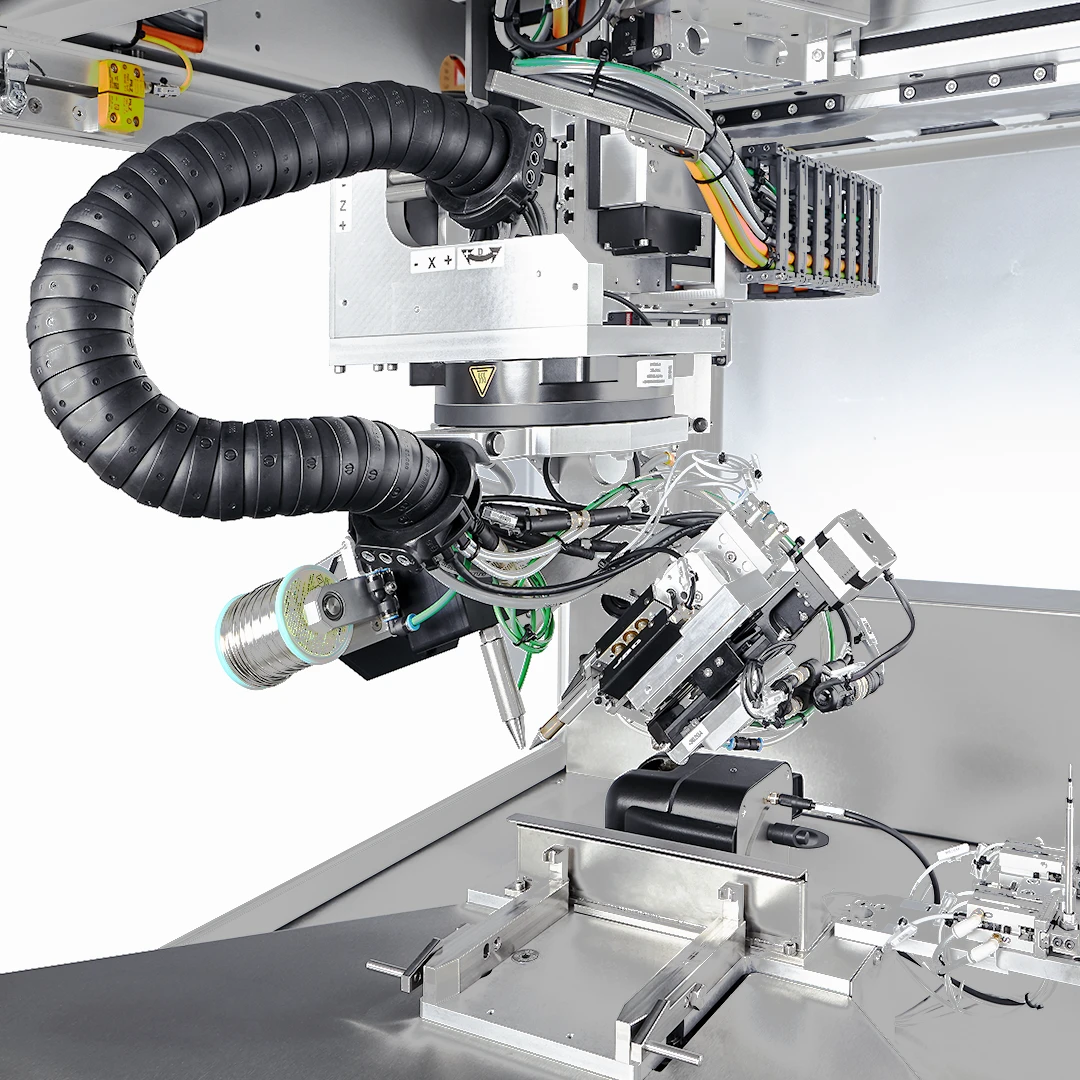
EUTECT offers the world's only piston soldering with controlled wire feed (SWF).

Benefit

The combination of the motorised and spring-loaded soldering tip feeder with the SWF module offers you a wide process and application window.

Performance

Piston soldering is based on the combination of a controlled wire feed and a precisely controlled soldering temperature. The perfect coordination of temperature and solder quantity creates high-quality and reliable solder joints. A key advantage of this method is the high level of repeatability, which is essential in series production in particular.

The soldering tip, which is the actual soldering tool, is positioned precisely on the area to be soldered. Thanks to the precise control, the soldering point can be heated in a targeted manner without damaging surrounding components. This is particularly important for sensitive electronic components or complex PCB layouts. Selective heating improves the quality of the solder joints and minimises rejects.

Modularity

EUTECT machines have a modular design and can be expanded or customised as required. This enables simple integration into existing production processes. Furthermore, the flexible SWF system adapter allows the solid and reproducible integration of soldering irons from a wide range of manufacturers.

Advantages of piston soldering

Piston soldering offers numerous advantages:

Areas of application

Piston soldering is mainly used in the electronics industry, where precise and reliable soldered joints are required. Typical fields of application are

Automated process control

The most significant technological advancement in this area is the EUTECT Sensitive Wire Feeder (SWF). This revolutionises wire feeding with a precise, force- and path-controlled regulation system that detects solder wire that is evasive or not completely melted.

One of the most important innovations that EUTECT has introduced in piston soldering is automated process control. By integrating sensors and using intelligent software, the soldering process is monitored and controlled in real time. This means that deviations in the temperature applied or in the wire feed can be recognised and corrected immediately. This drastically reduces production errors and ensures consistently high quality.

The machines also have the option of changing soldering tips automatically. This ensures that the production process can run without long interruptions. This is particularly advantageous in series production. The integrated extraction system is another plus point, as it cleans the exhaust air of harmful vapours and thus ensures a safer working environment.

Sustainability and efficiency

Thanks to the targeted use of material and energy, piston soldering is also a favourable solution from an ecological point of view. The controlled wire feed minimises material consumption and reduces waste. At the same time, the precise temperature control means that only the energy required to heat the solder joint is applied, which reduces energy consumption compared to other soldering processes.

Your EUTECT added value

Piston soldering from EUTECT offers a flexible and efficient solution for soldering tasks. With its precision, modularity and the possibility of automation, it is ideal for modern electronics production. The advantages in terms of accuracy, efficiency and sustainability make piston soldering a future-proof technology. The process helps companies to optimise their production processes and improve the quality of their products at the same time.

FAQs

In the case of automated Piston soldering The soldering tip, temperature, positioning and solder feed are controlled precisely. The soldering tip is automatically guided to the solder joint, heats it, and a defined amount of solder is fed into the joint. This results in reproducible soldering processes with consistent process parameters.

Automated piston brazing It enables a high degree of repeatability, precise temperature control and a controlled flow of solder. At the same time, only the area of the actual solder joint is heated. The process is therefore particularly suitable for sensitive components, complex assemblies and applications with high demands on process reliability and reproducibility.

Piston soldering It is particularly suitable for selective soldering tasks in electronics manufacturing. Typical applications include printed circuit boards and electronic assemblies, cables and connectors, sensors, and microelectronic components. The process is particularly useful when individual solder joints need to be processed with precision.

In manual piston brazing, positioning, brazing time and the feed of brazing alloy depend largely on the operator. Automated systems These process steps, on the other hand, are carried out on the basis of defined parameters. This makes it possible to reduce process variations and to document and monitor soldering processes in a reproducible manner.

Key process parameters include the temperature of the soldering tip, contact time, the position and contact pressure of the soldering tip, and the amount and speed of the solder wire feed. To ensure a stable process, these parameters must be tailored to the component, the solder joint, the printed circuit board and the solder used.

A controlled wire feed ensures that a defined amount of solder is fed to each solder joint. Variations in the solder feed can affect the formation of the solder joint. A controlled wire feed therefore contributes significantly to the reproducibility and process reliability of automated piston soldering.

The Sensitive Wire Feeder (SWF) from EUTECT is a controlled wire feed system. The wire feed is controlled in terms of both force and travel, so that any deviations during the feeding or melting of the solder wire can be detected. This makes the wire feed an actively monitored part of the soldering process.

The SWF monitors the wire feed during the process. This makes it possible, for example, to detect a misaligned wire or a solder wire that has not melted completely. This provides additional process information and enables more reliable monitoring of individual soldering operations.

Process quality can be monitored by tracking relevant parameters such as temperature, wire feed, positioning and process sequence. Sensors and software make it possible to detect deviations during the soldering process and to provide process data for quality assurance and traceability.

At the Piston soldering The heat is applied locally to the respective solder joint via the soldering tip. As a result, the surrounding areas of the assembly are subjected to less thermal stress than with methods in which larger areas are heated simultaneously. This is particularly advantageous in the case of sensitive components and complex printed circuit board layouts.

The soldering tip transfers heat to the solder joint and thus has a direct influence on the process. The geometry, temperature, positioning and condition of the soldering tip must be suitable for the application in question. In the case of automated systems An automatic soldering tip changer can also be used to avoid prolonged production stoppages.

Yes. Automated piston brazing modules can form part of individual manufacturing systems or existing production concepts. The modular design of the EUTECT systems allows them to be adapted to different automation and manufacturing requirements.

In the case of appropriately equipped automated systems Relevant process parameters can be recorded and documented. This supports quality assurance and traceability, and makes it possible to attribute process deviations to individual soldering operations or assemblies.

Piston soldering This is particularly useful when individual solder joints need to be processed in a targeted manner with locally limited heat input. However, the optimal soldering technology depends on factors such as component geometry, thermal mass, accessibility, amount of solder, cycle time and quality requirements.

The choice of solder depends on the specific application, the materials used and the requirements for the solder joint. It is crucial that the temperature control, the soldering tip and the wire feed are matched to the solder wire used and the specific application.

Yes. Automation offers particular advantages in mass production, as soldering parameters can be applied and monitored in a reproducible manner. Controlled wire feed and temperature control help to ensure consistent quality across large production runs.

Through a controlled wire feed The required amount of solder for each joint can be specified. This helps to reduce unnecessary material consumption. At the same time, the heat input during soldering with a soldering iron is essentially confined to the area of the respective joint.

Kontakt

Inhaltsverzeichnis