Induction soldering

Efficient induction soldering
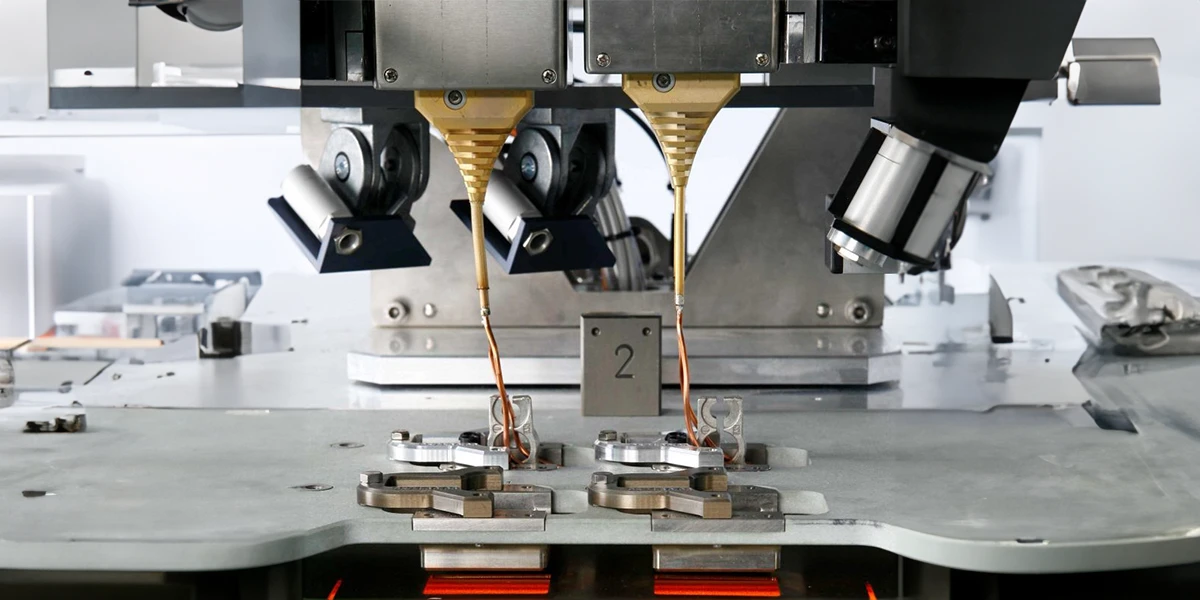
EUTECT induction soldering offers you the best possible access to the soldering process thanks to time, temperature and position profiles that can be intuitively configured via the EUTECT HMI and EMI. Furthermore, the EUTECT SWF ensures maximum process reliability and control for wire-guided soldering.

Benefit

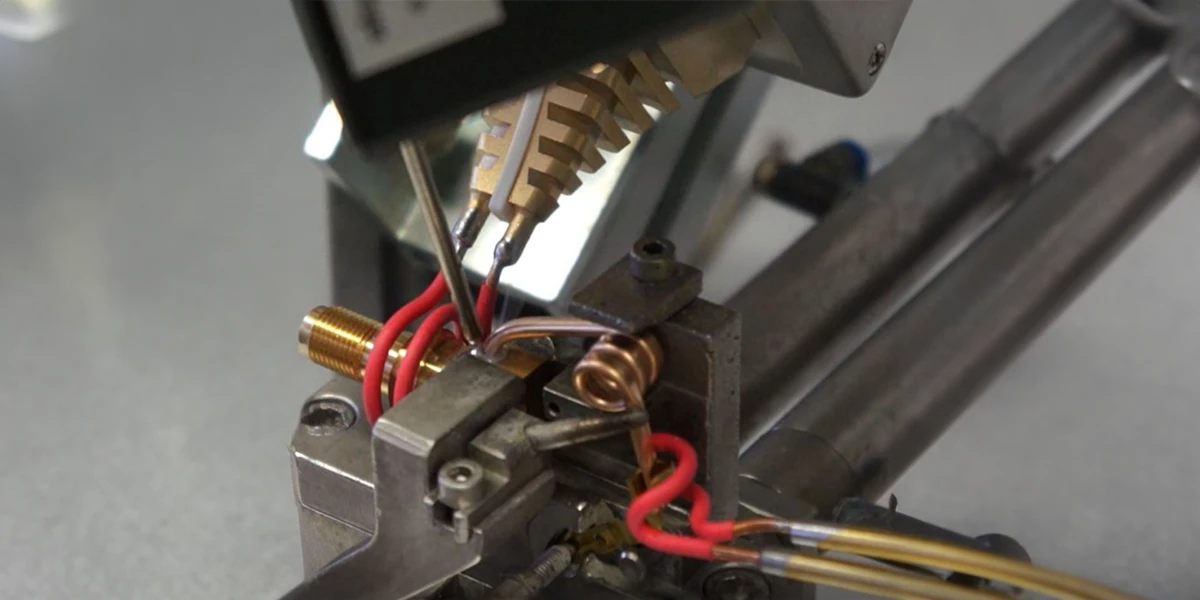
Induction soldering is used to process conductive materials in order to heat them quickly and without contact. Specific concentrations of the induction field on the soldering joint can protect surrounding components and utilise the energy efficiently.

Performance

Induction soldering is characterised by optimum heat input. In combination with the SWF-controlled solder wire feed and pyrometric temperature control, you have fast and controlled process management at your disposal.

Modularity

By combining the system with various wire feed and dispenser modules, you can carry out your specific soldering applications. You can also process solder pastes, SRS solder rings and preforms.

Product highlights

  • Energy efficient
  • Simple and intuitive parameterisation
  • Definable induction coupling through field line concentration
  • Minimized solder consumption
  • Regulated wire feed (SWF)
  • Low maintenance effort
  • Minimal footprint
  • 100 % traceability
  • Maximum service life
  • Freely definable energy input
  • Non-contact energy input
  • Immediate system and process availability
  • Fast temperature application
  • Integrated high-speed pyrometer control
  • EUTECT Recording Inspection Camera (ERICa)
  • High-frequency systems up to over 25 kW

Induction soldering systems from EUTECT

The EUTECT induction soldering process offers numerous advantages over other soldering processes:

Advantages of induction soldering

Induction soldering is an efficient, precise and energy-saving process that is particularly suitable for demanding soldering processes. EUTECT induction soldering systems can be customised to meet specific customer requirements. The modularly developed systems from EUTECT can be flexibly configured and integrated into existing production lines. In addition to the high level of flexibility, the systems' durability and ease of maintenance also take centre stage. The use of high-quality materials and state-of-the-art control technologies ensures maximum process reliability and repeatability.

EUTECT also offers comprehensive consulting and other services. Customers can rely on close cooperation, whereby the optimum solution for specific production requirements is developed together. EUTECT attaches great importance to sustainable and energy-efficient production and supports its customers in optimising their processes through the use of induction soldering systems.
Would you like to find out more?

Email address (business)
Country
Privacy policy
Newsletter
Position: 0
Slide to 5 to confirm you’re human.

FAQs

Decorative picture

At the Induction soldering An induction coil generates an alternating electromagnetic field. This induces electric currents in the conductive workpiece, thereby generating heat. The geometry and positioning of the inductor allow the energy input to be precisely concentrated on the desired solder joint. Temperature, time, position and energy input can be controlled according to the specific process requirements.

Decorative picture

The key advantages include rapid, contactless energy transfer, short heating times, high energy efficiency and precise, reproducible process control. As the heat is generated specifically within the soldering zone, adjacent areas are protected. Induction soldering It is also very well suited to automated manufacturing processes.

Decorative picture

Induction soldering It is particularly suitable for applications in which electrically conductive components need to be heated quickly, reproducibly and locally. The process can be used, for example, for electrical contacts, connection components, power electronics and other demanding assembly and joining tasks.

Decorative picture

In principle, the process is suitable for electrically conductive materials. How well a specific component can be heated inductively depends, amongst other things, on the material, geometry, electrical and magnetic properties, as well as the frequency used and the inductor geometry. For this reason, the induction process is tailored to the specific brazing application.

Decorative picture

With EUTECT, pyrometric temperature control can be utilised. This involves measuring the temperature without contact and using the data for controlled process management. In conjunction with defined time, temperature and position profiles, the heat input can be precisely tailored to the specific soldering task.

Decorative picture

The induction field can be precisely focused on the relevant area of the solder joint. This means that the entire component does not need to be heated. The localised and rapid heating can reduce the thermal stress on adjacent components.