Our process technology is characterised by customised, efficient concepts made up of tried-and-tested modules.
We offer customised automation solutions that are precisely tailored to customer requirements.
Our service, maintenance and training services are customised to your individual needs.
By jointly analysing process data and images as part of Predictive Quality, the detection rate of actual soldering defects is improved and the number of incorrectly classified solder joints is reduced. This has a direct impact on the cost-effectiveness of the soldering process.
Digitally analysed process steps, as part of smart manufacturing, enable continuous monitoring and evaluation of the selective soldering process. This means that quality can be assured whilst the solder joint is being formed, rather than only once the finished product has been produced. At the same time, the recorded process data forms the basis for seamless traceability, faster root cause analysis and predictive quality. In the long term, this could lead to self-regulating processes that automatically adjust parameters within defined limits, thereby further increasing process stability, reproducibility and plant availability.
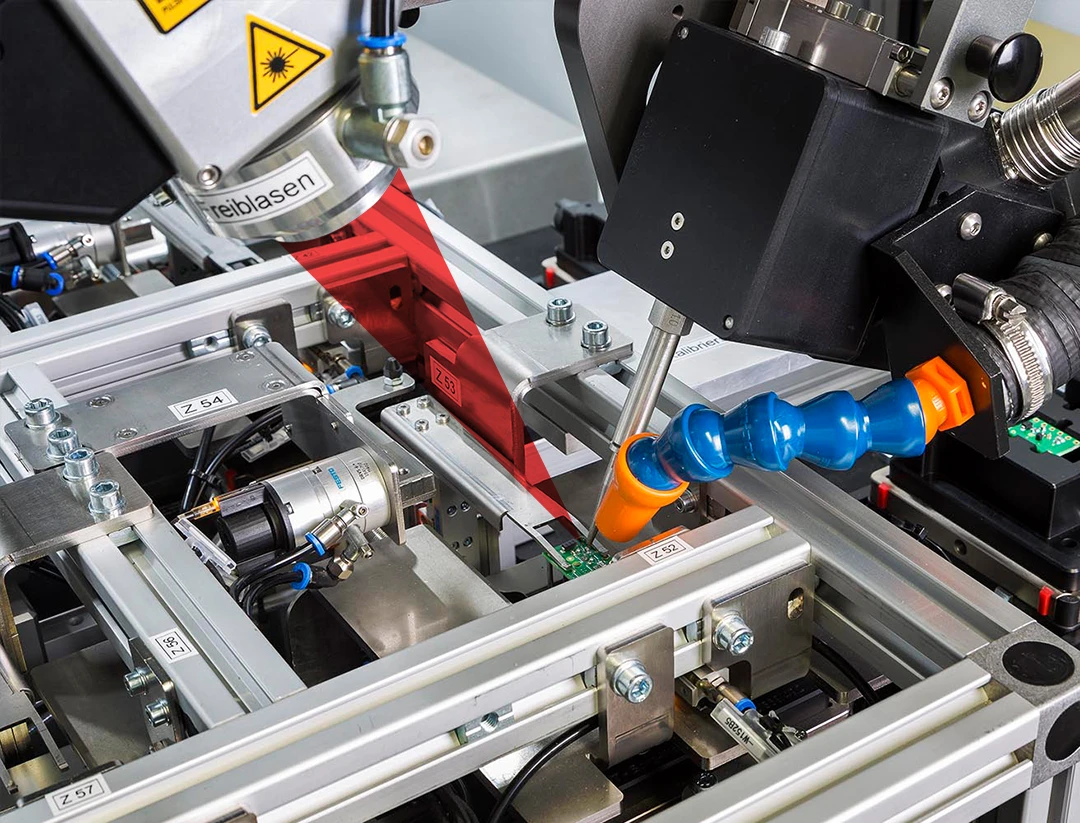
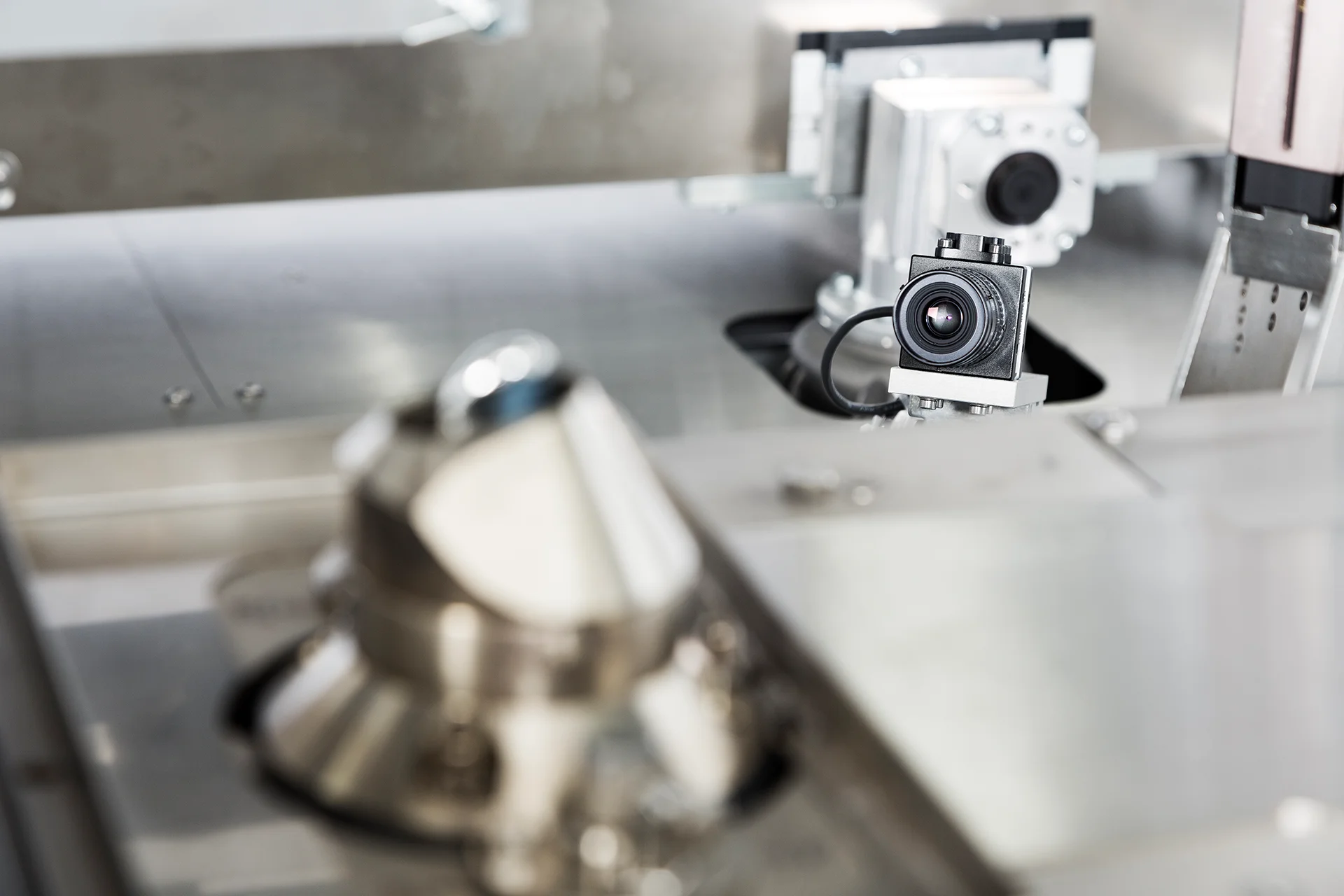
The camera, which is coaxially integrated into the laser optics, can detect defective solder joints by means of a smart comparison of target and actual values. Not only images but also videos can be recorded. The process camera thus performs the function of an AOI and makes a significant contribution to quality assurance and optimisation of the laser soldering process.
ILSE can be implemented and retrofitted in all existing laser soldering processes and with the cameras used in those processes. No further hardware needs to be integrated.
Should the camera recording carried out by ILSE detect a poor-quality solder joint during the laser soldering process, the relevant process data can be retrieved via EDA. This enables a comprehensive analysis to be carried out, revealing why this solder joint does not meet the specifications within the laser soldering process. This not only allows defective solder joints to be identified, but also enables the immediate analysis and optimisation of the relevant process step.
The control process for EUTECT’s soldering systems documents and stores all necessary process data. This data is recorded at every process step, saved and analysed by EDA. The data is compared with both the specified and the actual IO process data and is made available for further analysis. This means that a solder joint evaluation can be carried out based purely on the data.
Self-analysing process steps within the context of smart manufacturing are of particular interest where a fault-free solder joint is not sufficient in itself, but where it must also be demonstrated that it was produced under controlled and reproducible process conditions. This data must remain available beyond the production period for verification purposes. This applies in particular to medical technology, aerospace and defence, but also to railway technology, green energy, power electronics and automation.
EUTECT soldering systems not only carry out a programmed soldering process, but also monitor and evaluate the process during production in order to detect deviations at an early stage. This shifts quality assurance from a post-process inspection to process-integrated quality assurance. The system therefore not only produces a solder joint but also simultaneously provides digital evidence that the underlying process has been carried out within the defined quality limits.
As a result, the selective soldering system is evolving from a mere production machine into an intelligent, data-driven process system. EUTECT works not only with traditional process parameters, but also – depending on the soldering process – with data from wire feeding, force/displacement control, temperature monitoring, pyrometry, camera systems and other sensors. This results in a significantly more comprehensive digital process overview for each soldering operation.
Key components of this include, amongst others, ILSE (for laser soldering) and EDA.