
The soldering nozzle as a key factor in mini-wave soldering
The solder nozzle plays a key role in determining how the solder wave forms and strikes the printed circuit board. It therefore has a direct influence on the quality of wetting and the penetration behaviour of the solder.
The key factors here are the geometry of the nozzle opening, the exit angle and the stability of the flow. These parameters determine how evenly the solder reaches the solder joint and whether complete wetting is achieved.
An optimally designed soldering nozzle ensures that the solder wave remains stable and the quality of the solder joints remains consistently high, even with complex assemblies.
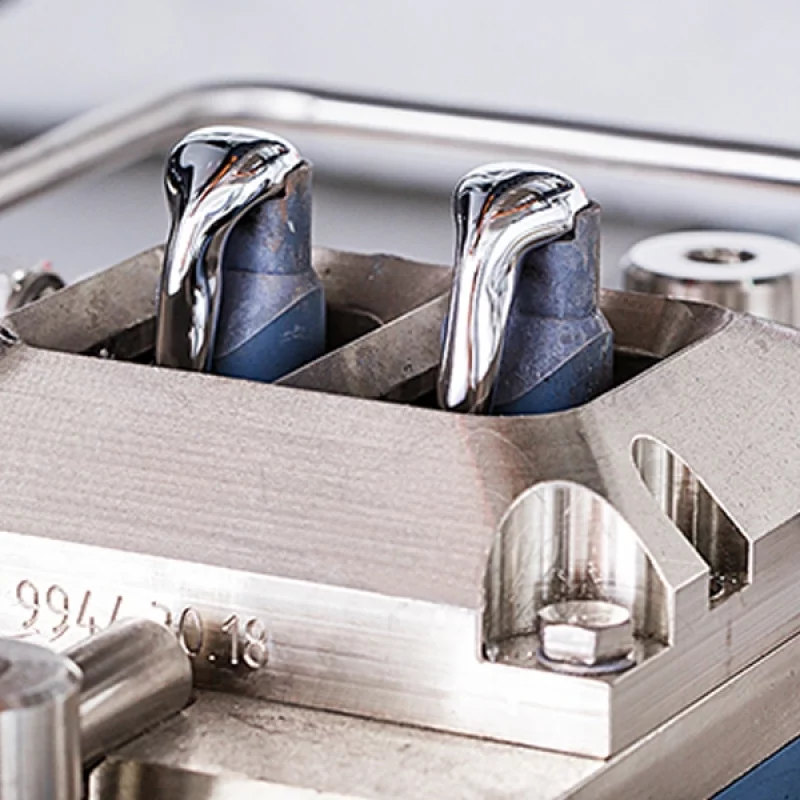
The role of titanium solder masks in process control
Titanium solder masks precisely define the area within which the solder wave is permitted to act. They ensure that only the intended solder joints are wetted, whilst at the same time protecting adjacent components from unwanted solder contact and thermal stress.
Thanks to their high dimensional stability, titanium solder masks retain their shape even at high temperatures. This ensures that the process remains consistent and the quality of the solder joints remains stable.
In addition, they facilitate the precise routing of the solder flow, which is particularly crucial in densely populated assemblies.
Why it is crucial to ensure that the soldering nozzle and titanium soldering masks are correctly matched
The alignment between the solder nozzle and the titanium solder masks is a key factor for success in mini-wave soldering. Even minor geometric deviations can alter the flow of the solder wave and thus affect the quality of the solder joints.
Typical consequences of inadequate alignment include incomplete wetting, the formation of solder bridges or unstable solder flow. These faults not only lead to quality issues, but also to increased rework.
When both components are precisely matched, the flow of solder is controlled. The result is reproducible solder joint quality combined with high process stability.
The effect of the workpiece carrier on process stability
Alongside the solder nozzle and mask, the workpiece holder plays a key role. It ensures that the assembly remains precisely positioned throughout the entire process. Stable and precise positioning is essential to ensure that the solder wave always hits the same spot. Even minor positional deviations can affect wetting and lead to fluctuations in quality.
An optimised workpiece carrier reduces tolerances and ensures that the process remains reproducible even in series production.
Thermal behaviour and its impact on process stability
In mini-wave soldering, all the components involved are exposed to high temperatures. Materials react to this by expanding, which can affect their geometry.
Titanium solder masks offer a decisive advantage in this respect. Thanks to their low thermal expansion, they retain their shape even under thermal stress. When used in combination with a correctly matched solder nozzle, their relative position to the solder joint remains constant.
This stability is a key prerequisite for consistently high-quality solder joints over many process cycles.
Cost-effectiveness through coordinated processes
The precise coordination of all components has a direct impact on efficiency. The benefits are:
- reduced splashes and residue
- less tool wear
- longer service life
- reliable production processes
This reduces operating costs and increases system availability.
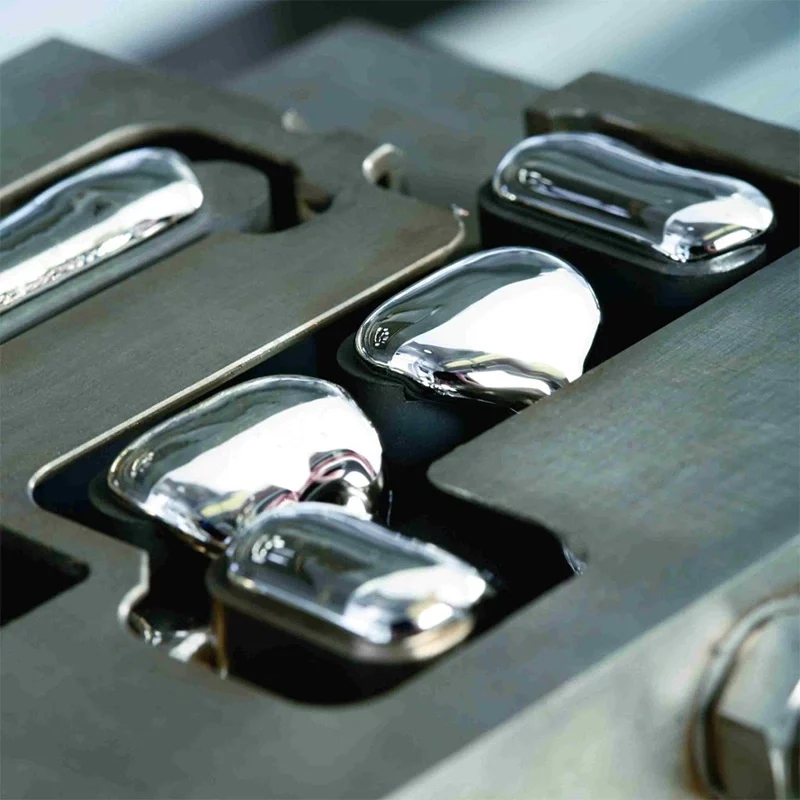
Precision: the key to solder joint quality
In mini-wave soldering, the coordination of the solder nozzle, titanium solder masks and workpiece carriers is crucial to process stability and the quality of the solder joints. Only through the precise interaction of these components can reproducible results and high-quality solder joints be achieved in series production.