Our process technology is characterised by customised, efficient concepts made up of tried-and-tested modules.
We offer customised automation solutions that are precisely tailored to customer requirements.
Our service, maintenance and training services are customised to your individual needs.
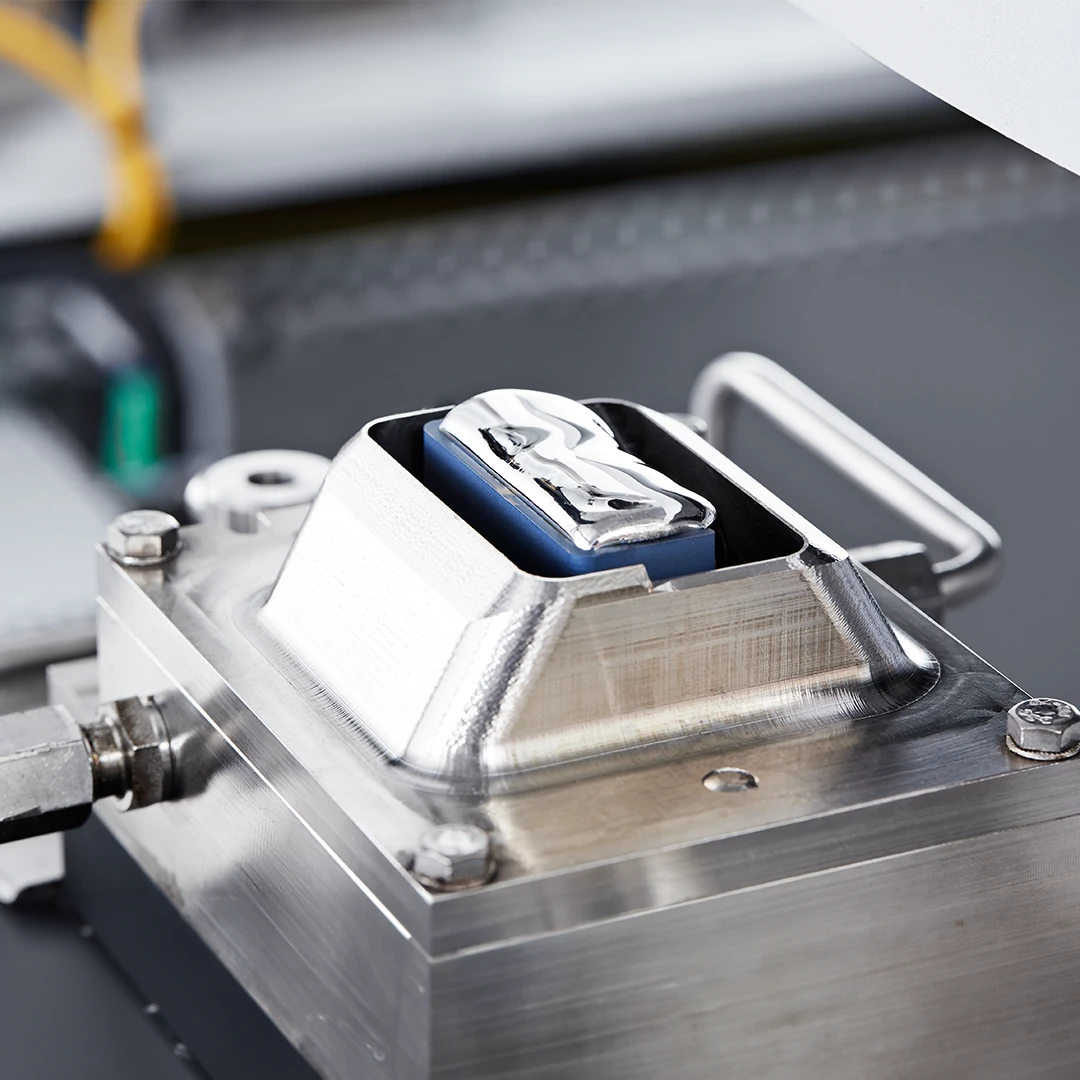
EUTECT provides product-specific nozzles for the respective soldering task. Customised, single-sided solder nozzles generate the best possible solutions for the respective challenge.
For an optimum soldering result, it is important that the geometry of the soldering nozzle, together with the nitrogen bonnet, is matched to the product to be soldered. We therefore develop and design a specific soldering nozzle with a customised gas hood geometry for each customer-specific application. A product-specific soldering nozzle, in combination with product-specific titanium masking and workpiece carriers, enables maximum solder joint quality with a long service life and optimised cycle times.
Different soldering nozzles are available:
Product-specific nozzle geometries play a central role in the soldering process, as they enable the exact placement and dosage of the solder. The shape of the nozzle determines how precisely the solder is applied, especially for small or closely spaced components. A precisely fitting geometry ensures even solder distribution and reduces reworking. Product-specific nozzle geometries also allow the processing of complex PCB layouts. The entire soldering process can be optimised and costs saved thanks to the precise design and production of the geometry.
EUTECT not only offers standardised nozzle geometries, but also individual designs that are specially developed for the requirements of the solder joint. Different parameters must be taken into account. For small solder joints or assemblies with high packing densities, the nozzle geometry can be designed to be correspondingly delicate, while larger components with corresponding heat requirements require larger geometries. Furthermore, different solder alloys result in different flow behaviour of the solder, which is influenced by the nozzle geometry. The soldering temperature and duration must also be taken into account when designing the geometry, as the geometry contributes to optimum heat transfer and directly influences the soldering quality.
The Nozzle geometry describes the shape and design of the soldering nozzle from which, during selective Mini wave soldering the liquid solder flows out. Among other things, it determines the shape of the solder wave, which areas of an assembly come into contact with the solder, and how precisely heat and solder are transferred to the solder joint. A nozzle geometry tailored to the assembly therefore contributes significantly to a stable and reproducible soldering process.
The Nozzle geometry directly influences the flow of the liquid solder, heat transfer and the wetting of the solder joint. Particularly in the case of small solder joints, high component densities or complex printed circuit board layouts, the solder must be directed very precisely to the intended areas. A suitable nozzle geometry promotes uniform wetting and reduces the risk of unwanted solder spread or solder beads.
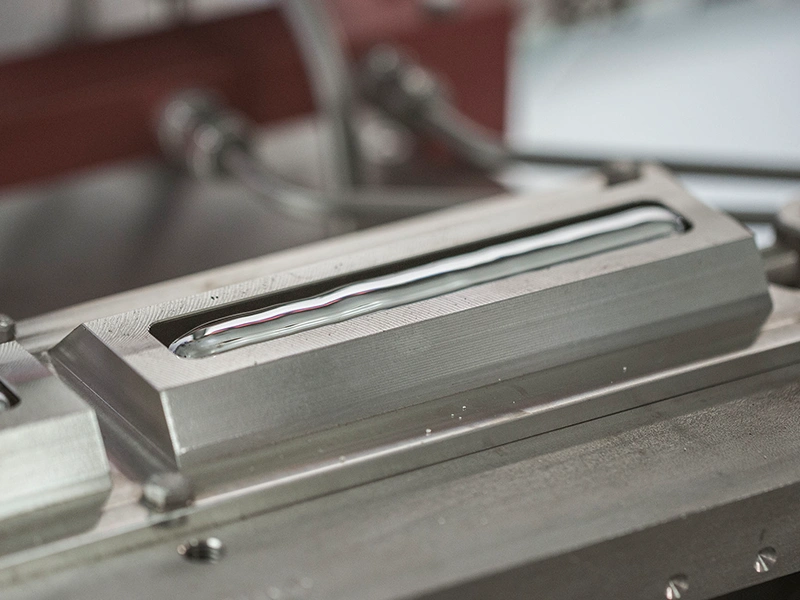
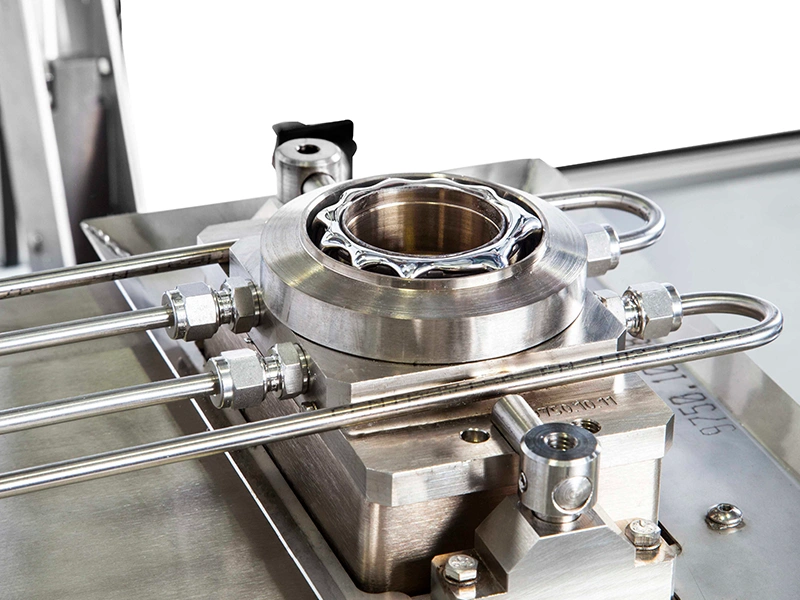
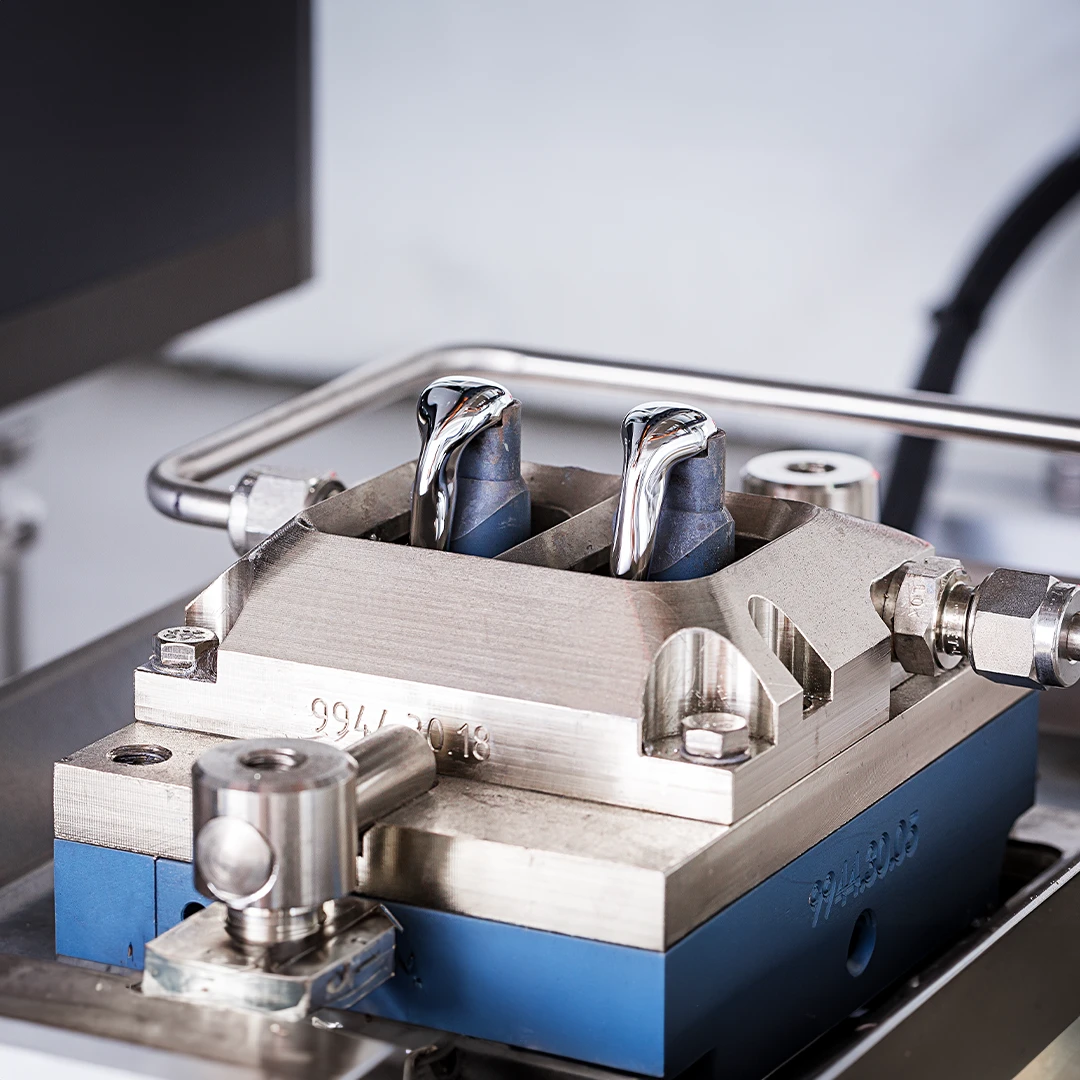
Different types of soldering can be carried out for various soldering tasks Nozzle geometries are used. EUTECT uses, amongst other things, spot nozzles, double spot nozzles, line nozzles, ring nozzles and matrix nozzles. The choice of suitable geometry depends on the specific assembly, the solder joints, the component geometries and the requirements of the soldering process.
A Point nozzle is suitable for the targeted soldering of individual joints or small, defined areas. Due to the localised Miniwave the solder can be guided precisely to the desired soldering point. This is particularly advantageous in selective soldering processes involving components that are closely spaced or thermally sensitive.
Line, ring and matrix nozzles are used when several solder joints or specific geometric areas are to be applied with solder simultaneously. A line nozzle, for example, can cover several contacts arranged in a line. Ring and matrix geometries allow the solder wave to be adapted to more complex terminal and component geometries. This enables multiple solder joints to be processed within a single process step and cycle times to be optimised.
The Selecting the soldering nozzle is determined on the basis of the specific soldering task. Factors taken into account include, amongst others, the size, position and arrangement of the solder joints, component heights, packing density, thermal mass, solder alloy and the required heat transfer. EUTECT therefore develops product-specific soldering nozzles that are tailored to the respective assembly and the intended soldering process.
Customised soldering nozzles can be precisely adapted to the geometry of the assembly and the solder joints to be processed. This allows for precise control of flux flow and heat input. This promotes high-quality solder joints, stable processes and short cycle times, and also enables selective soldering of complex printed circuit board layouts.
The Nozzle geometry This influences the distribution and flow of the solder, as well as the heat input into the solder joint. A geometry tailored to the application enables a controlled flow of solder and uniform wetting. This improves the reproducibility of the soldering process and reduces the need for rework.
A system designed specifically for the product Nozzle geometry can process several solder joints selectively or simultaneously, thereby avoiding unnecessary movements and process steps. In particular, line, ring, double or matrix nozzles can help to process several contacts within a single soldering operation. The nozzle design is therefore a key factor in optimising cycle times for selective soldering processes.
At the EUTECT mini wave soldering will be solder nozzle and the nitrogen hood are both tailored to the specific application. The integrated or targeted nitrogen supply helps to maintain the required process conditions in the vicinity of the solder joint. EUTECT relies, amongst other things, on specialised nitrogen hoods and preheated nitrogen.
Different solder alloys have different flow and wetting properties. These properties must be taken into account when designing the Nozzle geometry must be taken into account. In addition to the solder alloy, the soldering temperature, process duration, heat requirements of the components and the necessary heat transfer also play a role in the design of a product-specific soldering nozzle.
Yes. Particularly in the case of assemblies with high packing densities, individually designed Nozzle geometries sensible. The nozzle can be designed in such a way that the solder is directed precisely to the intended solder joints, whilst neighbouring components are affected as little as possible by heat or contact with the solder.
At the Mini wave soldering form solder nozzle and the titanium solder mask form a coordinated system. The solder nozzle shapes and guides the solder wave, whilst the solder mask defines which areas of the assembly are to be exposed to or protected from the soldering process. Thanks to their coordinated design, solder flow, heat input and accessibility of the solder joints can be specifically adapted to the assembly.
Yes. Customised nozzle geometries enable the adjustment of the Mini-wave soldering process complex printed circuit board layouts, different component heights and varying thermal masses. Nozzle, nitrogen hood, Titanium mask and workpiece holder can be designed jointly to suit the respective assembly.
A controlled and, as far as possible, uniform flow of solder is a key factor in minimising undesirable soldering effects. A process tailored to the assembly Nozzle geometry promotes controlled solder reflux and a stable solder flow. Combined with appropriate process control, this can reduce the risk of solder beads.
Product-specific Nozzle geometries They facilitate reproducible soldering conditions, targeted heat transfer and a defined flow of solder. This enables the optimisation of process stability, solder joint quality and cycle time. At the same time, complex assemblies can be processed selectively, reducing unnecessary thermal stress on adjacent areas.