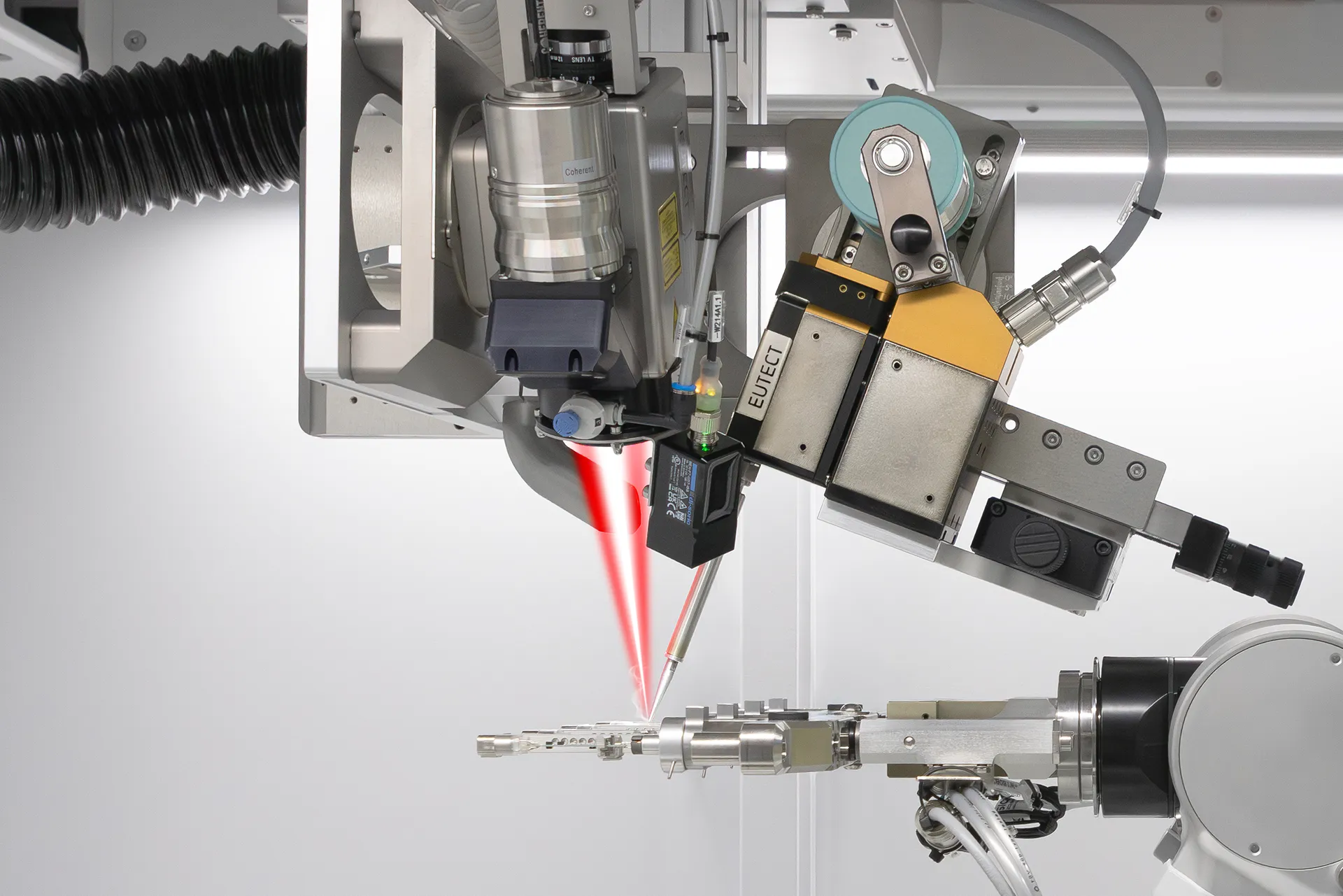
With Solder Guard, EUTECT combines process data with intelligent target-actual image processing and data analysis. This enables the quality of selective solder joints to be assessed automatically, deviations to be detected at an early stage, and soldering processes to be continuously monitored. Solder Guard takes a decisive approach to quality assurance in electronics manufacturing. The quality of a solder joint should not be checked only after the manufacturing process has been completed, but should be ensured whilst it is being formed. To this end, the process data generated by EUTECT’s control technology is combined with information from image processing and evaluated jointly.
You can find further information about the EUTECT Solder Guard here:
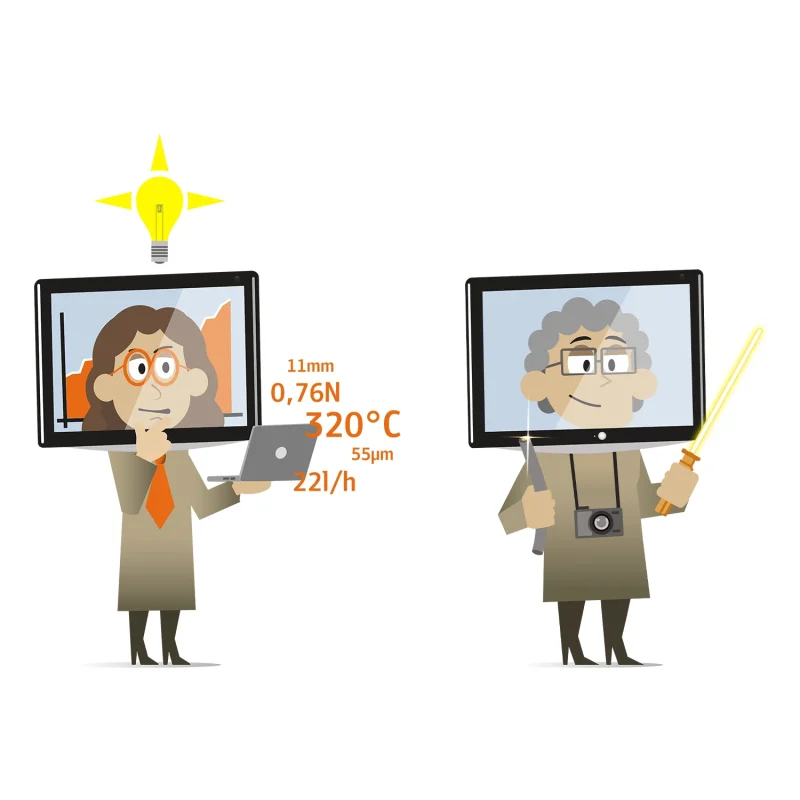
EUTECT soldering systems measure and record the relevant process parameters throughout the entire soldering process. Depending on the soldering process used, information from sources such as wire feed, force and position control, temperature monitoring, pyrometry, camera systems and other sensors can be taken into account. This provides a comprehensive digital process overview for each soldering operation.
A key component is the analysis of the recorded process data by EDA. The data is compared with both specified and actual IO process data and is subsequently available for further analysis. In conjunction with image-based evaluation, this not only makes it possible to determine whether a solder joint deviates from the defined specifications, but also to trace the process conditions under which the solder joint was formed.
Solder Guard thus lays the foundations for predictive quality in selective soldering. Changes and deviations in the process can be detected and assessed at an early stage. Rather than merely identifying defects that have already occurred, the focus is increasingly shifting to whether a process is developing in a direction that could pose a potential quality risk. This offers several advantages for users:
- actual soldering faults can be detected more reliably
- false errors are reduced
- test results are linked to the corresponding process data
This results in comprehensive documentation for traceability. The causes of quality deviations can be analysed more quickly, and individual process steps can be optimised in a targeted manner.
This approach is particularly relevant for high-reliability applications, such as in medical technology, aerospace, defence, railway technology, green energy, power electronics and industrial electronics. In these fields, it is not only a reliable solder joint that is crucial. It is often necessary to be able to demonstrate that it was produced under defined and reproducible process conditions.
Another advantage
Solder Guard can also be retrofitted to older EUTECT systems. This allows image- and data-based quality assurance to be integrated into existing production environments.
"I am your contact person"

Sales management